
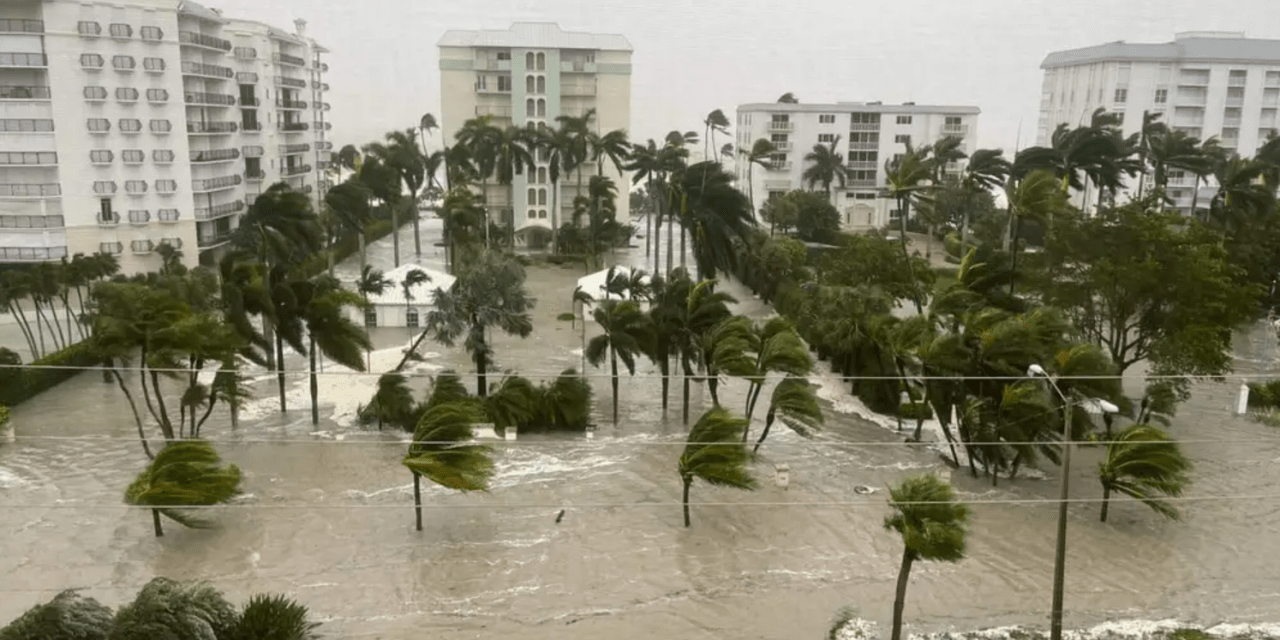

The U.S. is headed into what’s expected to be a busy hurricane season, according to the National Oceanic and Atmospheric Administration (NOAA), which forecast up to 25 named storms over the summer—which would be a record.
While more storms doesn’t guarantee more damage, it certainly elevates the risk to property.
“If there were a virtual dashboard for how bad this hurricane season would be, every one of the boxes is red,” said Tom Larson, an insurance expert with real estate data firm CoreLogic. “It doesn’t mean that we’re definitely going to have a bad hurricane season, but everyone’s on alert that this could be a very bad year.”
There are 32.7 million homes in the country with at least moderate exposure to damage from hurricane winds, and a further 7.7 million homes are at risk from storm surge, according to an annual report CoreLogic released Thursday, which estimates the level and cost of hurricane risk to America’s housing inventory.
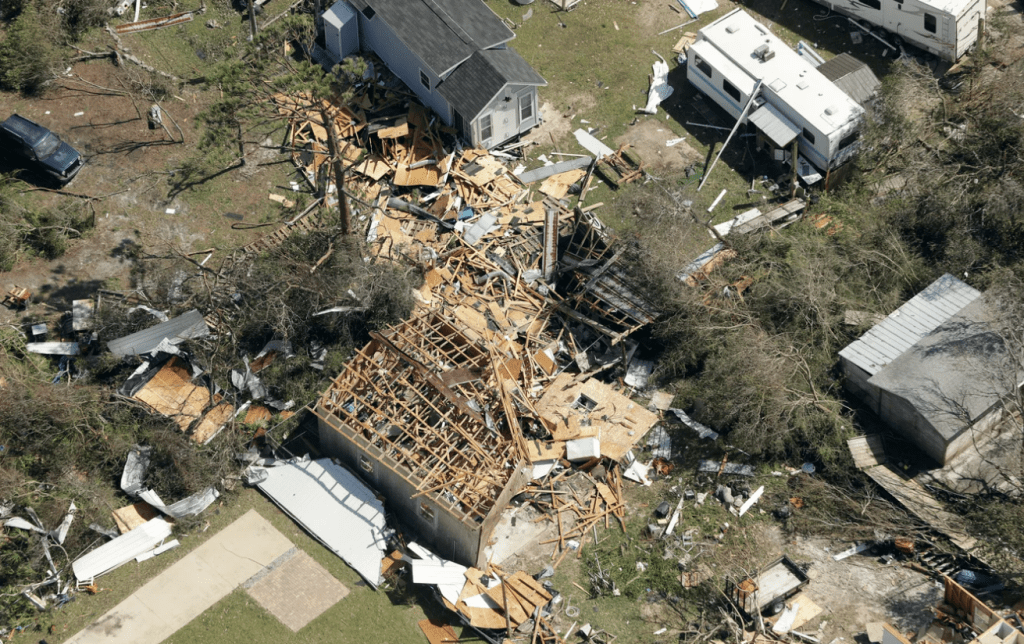
The total cost of that risk—as measured by reconstruction cost value—is $10.8 trillion from wind damage and $1.6 trillion from storm surge in the worst case scenario. Of the total homes with potential exposure to hurricane winds, 6.4 million homes are at extreme risk with a total value of $2.3 trillion.
BREAKING! NOAA Issues Its Most Aggressive Storm Forecast Yet Ahead Of Hurricane Season
The model doesn’t only take into account how likely it is for a hurricane to occur in a given location—and the wind speeds and storm surge that would result at varying intensities—but also how vulnerable each home is to damage from that storm, based on age, materials, building codes and other factors.
“It’s an interesting way to look at risk, to be able to help people understand, ‘If there were a hurricane to come to my house, is my house likely to get damaged?’” said Larson.
While South Florida gets the most hurricanes of any other region in the U.S., it actually has some of the least exposure to wind damage because of building codes put in place after Hurricane Andrew in 1992. Still, Florida cities like Tampa and Naples, which have experienced fewer hurricanes, have an older housing stock that’s less resilient to storms.
CoreLogic does not break out luxury housing data, but the cities facing the greatest damage include several major financial capitals with higher home values. Overall, the three metro areas with the highest exposure to hurricanes—due to a combination of population, size and proximity to the coast—are Miami, Houston and perhaps more surprisingly New York City, according to the CoreLogic report.
New York has 3.8 million homes at risk of wind damage for a total value of just under $2 trillion, with another 878,226 homes vulnerable to storm surge, at a cost of $415 billion. Houston and Miami have over 2 million homes each with exposure to hurricane winds at a cost of $671 billion and $511 billion, respectively. Miami’s storm surge exposure is far higher, though, with 509,133 homes exposed at a total risk of $124 billion, compared to 192,937 homes exposed in Houston and its surrounding Harris County at a value of $52.6 billion.
While these numbers matter at the aggregate level to insurers, individual homeowners should consider their own risk, said Larson. There’s a growing “coverage gap” in the U.S. where damage from storms exceeds the amount covered by insurance.
That is partially due to homeowners choosing higher deductibles to lower premiums as insurance costs accelerate, and because many homeowners forgo flood insurance if they’re not required to have it.
Florida Warns Residents to PREPARE NOW for Highly Anticipated RECORD BREAKING Hurricane Season
“Our studies have shown that 70% of homes that are flooded are uninsured,” said Larson. “A lot of owners get shocked. A lot of these floods are sufficiently infrequent that people have felt comfortable feeling it doesn’t apply to them.”
For higher value homes, there’s often both the value of the home itself and the value of what’s inside the home to consider when choosing the appropriate level of coverage.
“As you go higher and higher in home values, what’s inside the house changes so that the insurance product changes,” said Larson. “That’s why you have different insurers that focus on high-value homes.”
Hurricane season runs from June 1 to November 30, and NOAA is forecasting between 17 and 25 storms and between eight and 13 hurricanes, of which four to seven could be major hurricanes, defined as Category 3 or higher, per their annual forecast released earlier this month. NOAA generally revises its forecast later in the season.
Last year was an especially active year for hurricanes, with 20 named storms—the fourth highest on record—but only one hurricane made landfall, as did several tropical storms, resulting in a fairly low level of damage.
Water temperatures in the Atlantic and Gulf of Mexico broke records last year, reaching new heights faster than most scientists predicted, and are predicted to remain far hotter than average in the near future. The combination of those higher temperatures—which can contribute to the rapid intensification of tropical storms—and the expectation of a La Nina weather pattern forming mid-summer contributed to NOAA’s forecast. Read more here…