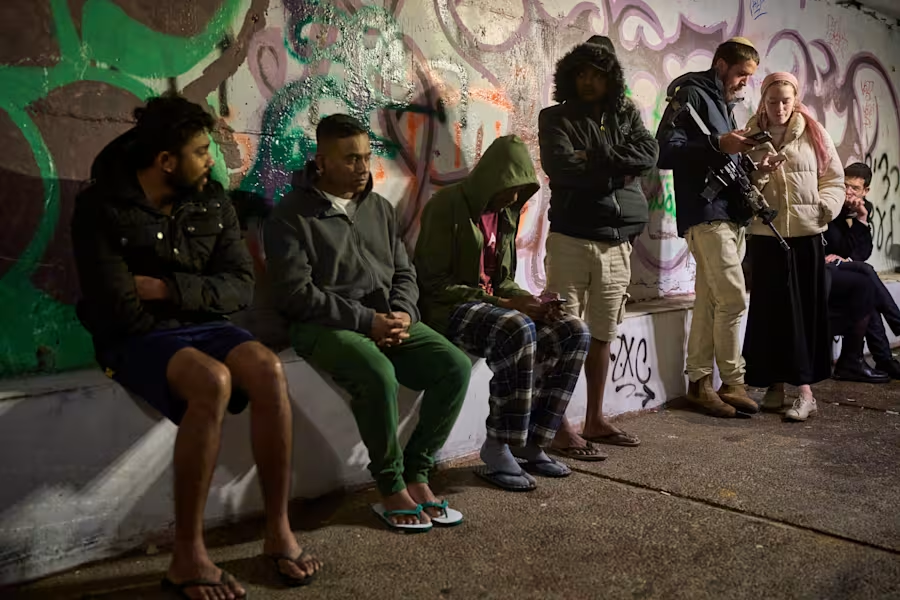

On one of the holiest days on the Islamic calendar, Iran fired on Israel and energy sites in neighboring Gulf Arab states, insisting that it can still build missiles and issuing a new threat: to deny safety to its enemies in “parks, recreational areas and tourist destinations” worldwide. Israel meanwhile pounded Tehran with airstrikes as Iranians marked Nowruz, the Persian New Year.
The U.S. military is deploying three more warships and roughly 2,500 more marines to the Middle East, where there’s no end to the war in sight despite three weeks of U.S. and Israeli air strikes that have decimated Iran’s military and leadership. The Pentagon’s request for another $200 billion to fund the war would need congressional approval as the U.S. national debt hits a record $39 trillion.
Prime Minister Benjamin Netanyahu said Israel will stop attacking the gas field that Iranians depend on for most of their electricity at the request of U.S. President Donald Trump. Iran responded to Israel’s attack on the field by intensifying targeting of energy infrastructure in other Middle East countries, sending oil and gas prices soaring.
The death toll has risen to more than 1,300 people in Iran, more than 1,000 people in Lebanon, 15 in Israel and 13 U.S. military members in the region. Millions of people in Lebanon and Iran have been displaced.
Here is the latest:
232 service members injured in Iran war so far, U.S. military says
Capt. Tim Hawkins, the spokesman for U.S. Central Command, told The Associated Press that 232 service members have been injured in the Middle East.
That’s 30 more than a previous military tally of roughly 200 from Monday.
Hawkins said 207 of the 232 injured have already returned to duty. The number of service members that are considered seriously wounded has remained at 10.
Since the war in Iran began, 13 U.S. service members have been killed.
Lebanon death toll reaches 1,021 and millions in Iran seek refuge
Support Independent Journalism – Tomorrows News TODAY… BP NEWS
Lebanon’s Health Ministry said Friday that 20 deaths were reported over the past 24 hours, and that 57 more people were wounded raising the total injured to 2,641.
Israel renewed its offensive in Lebanon after Iran-backed Hezbollah fired rockets into northern Israel, two days after the U.S. and Israeli attacks on Iran triggered the widening war. Israel has since ordered evacuations from large parts of Lebanon, displacing more than 1 million people.
The U.N. refugee agency said last week that more than 3.2 million people inside Iran have been displaced as U.S. and Israeli airstrikes target Tehran and other major cities. And on Thursday, the U.N. migration agency said more than 80,000 people had fled to neighboring countries, mostly Afghanistan.
Israel strikes Iran’s feared Basij from commanders down to street level, but its grip remains strong
Iran threatened recreational and tourist sites worldwide, insisted it was still building missiles and its supreme leader issued another defiant statement on Friday. The United States was deploying more warships and another 2,500 Marines three weeks into the war it launched alongside Israel.
Iran fired on Israel and energy sites in neighboring Gulf Arab states as many in the region marked one of the holiest days on the Muslim calendar. Iranians were also celebrating the Persian New Year, known as Nowruz, a normally festive holiday that is more subdued this year.
With little information coming out of Iran, it was not clear how much damage its arms, nuclear or energy facilities have sustained in the punishing U.S. and Israeli strikes that began Feb. 28 — or even who was truly in charge of the country. But Iran’s attacks are still choking off oil supplies and denting the global economy, raising food and fuel prices far beyond the Middle East.

![AS Haiti descends into political and economic chaos, people resort to Cannibalism [extremely graphic video]](https://blazingpress.com/wp-content/uploads/2024/03/DSADSADAS-440x264.jpg?crop=1)