RELATED: Continuity of Government drills in D.C. late last night raises suspicions

Russia’s Borei-class nuclear-powered submarines may surpass American submarines in sonar capability and situational awareness, posing a significant strategic threat. Equipped with the advanced Irtysh-Amphora-B-055 sonar system, Borei submarines can detect underwater threats more effectively than the U.S. Navy’s Ohio- and Virginia-class subs.
Russia’s Borei-class nuclear-powered submarines may surpass American submarines in sonar capability and situational awareness, posing a significant strategic threat. Equipped with the advanced Irtysh-Amphora-B-055 sonar system, Borei submarines can detect underwater threats more effectively than the U.S. Navy’s Ohio- and Virginia-class subs.
What You Need to Know: Russia’s Borei-class nuclear-powered submarines may surpass American submarines in sonar capability and situational awareness, posing a significant strategic threat. Equipped with the advanced Irtysh-Amphora-B-055 sonar system, Borei submarines can detect underwater threats more effectively than the U.S. Navy’s Ohio- and Virginia-class subs.
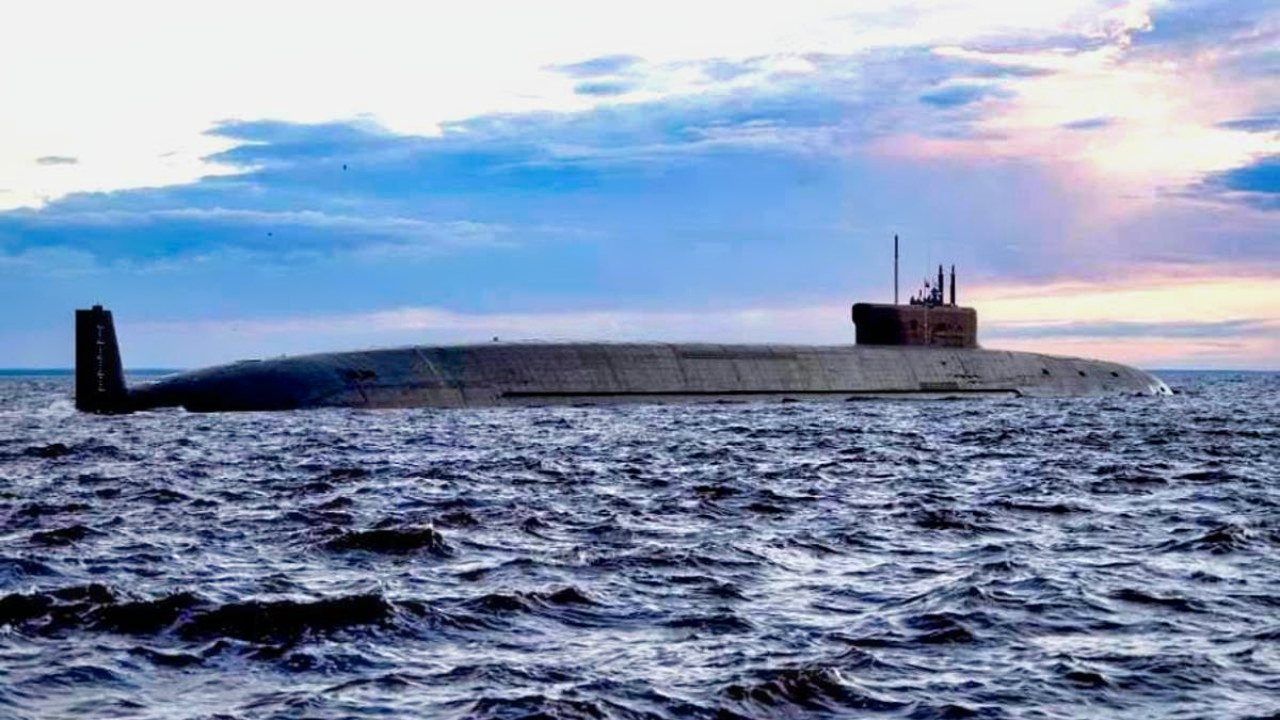
-Russia’s current fleet includes four Borei submarines, with potential for expansion. As the Russian Navy enhances its submarine force, Western naval dominance faces an increasingly formidable challenger beneath the seas.
Russia’s New Borei-Class Submarines: A Game-Changer Underwater?
Russia might have the world’s best new nuclear-powered submarine. The Borei-class nuclear-powered submarine comes equipped with the most advanced sonar system that allows its crew to have greater situational awareness than even the mightiest American submarine.
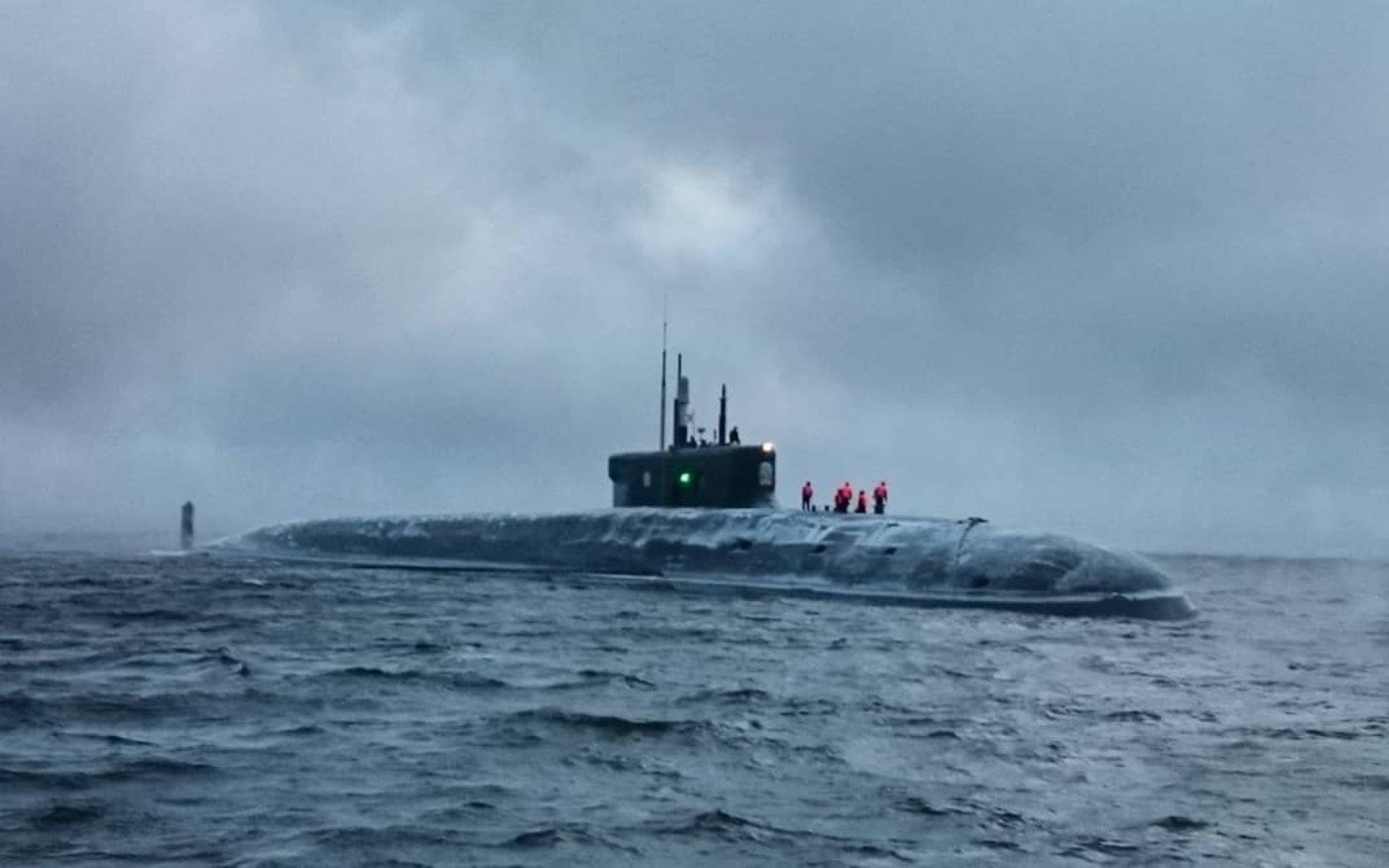
The Borei-class is truly among the most sophisticated submarines in the world. Not only are these subs sporting what might be the world’s most advanced sonar systems, but the Borei-class submarines can fire Russia’s most advanced nuclear weapon, the Bulava.
The Details of This Submarine
According to Naval-Technology.com, the Borei-class began its existence in 1996, just a few short years after the caustic collapse of the Soviet Union, at least, it was for the Kremlin. However, the first submarine of this class did not hit the High Seas until 2009 and was not commissioned by the Russian Navy until January 2013. Russia’s most recent Borei submarine was commissioned in 2020.
The Borei-class submarines were designed to accommodate “the new submarine-launched ballistic missiles (SLBM) Bulava in place of the abandoned R-39UTTH Bark missile.”
Currently, the Russian Federation’s Navy operates four Borei-class submarines. They were designed by the Rubin Marine Equipment Design Bureau and built by the Northern Machine Building Enterprise at the legendary Sevmash Shipyard.
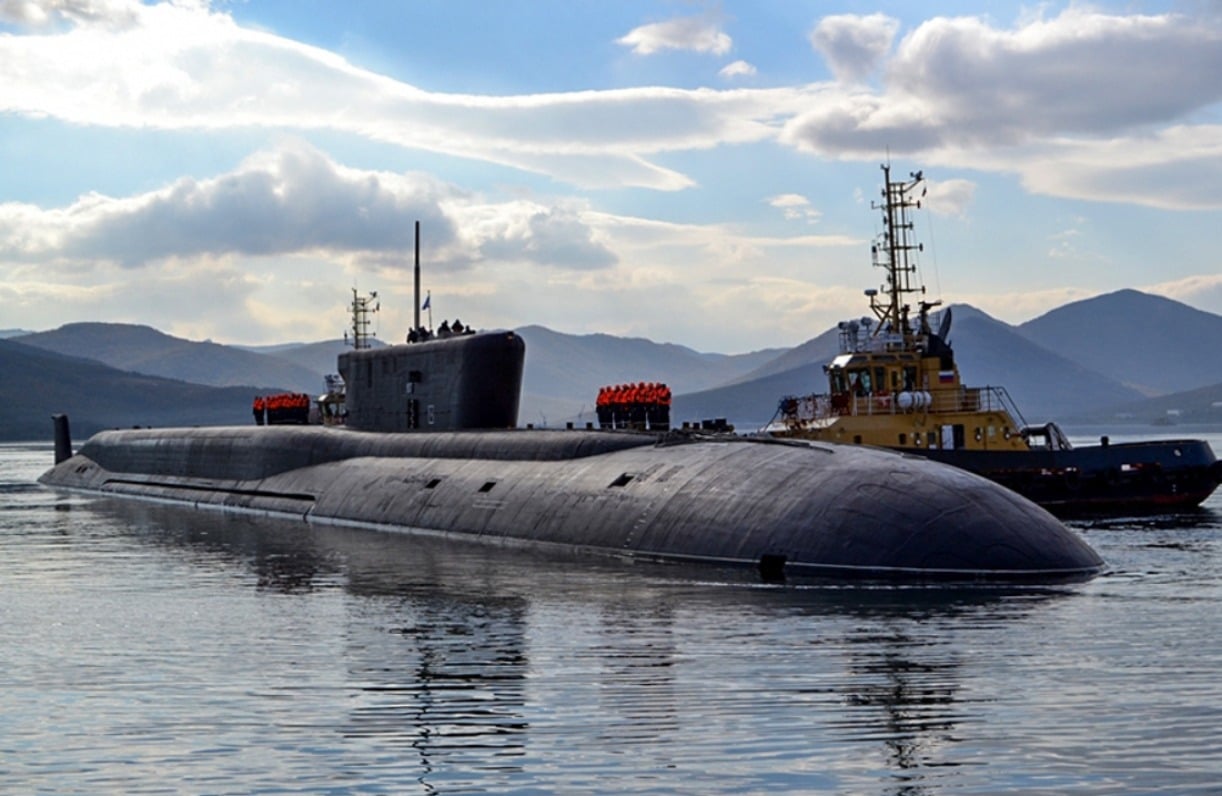
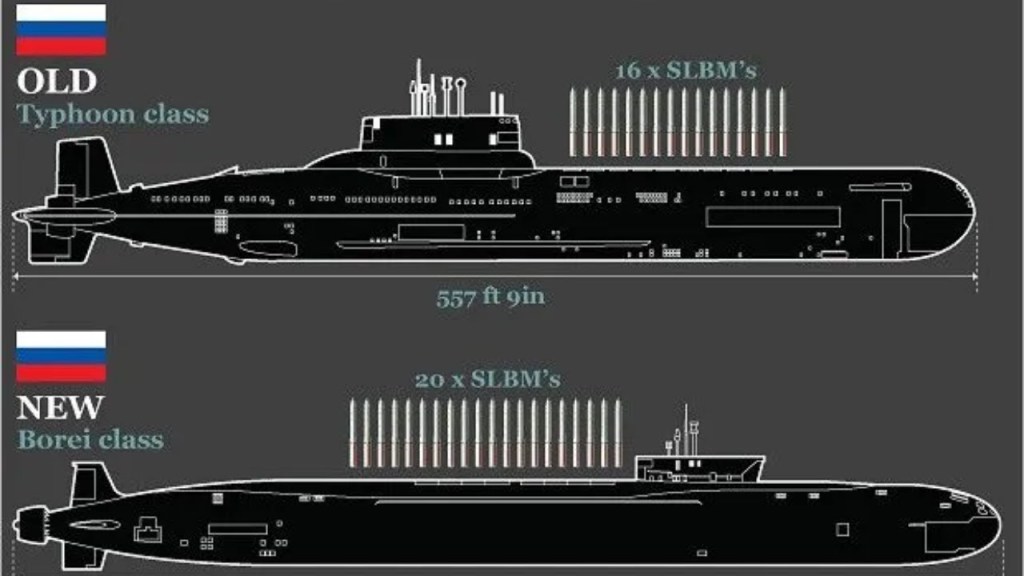
Borei-class submarines have smaller displacement levels than the iconic Russian Typhoon-class. But the two classes of submarines can carry the same number of missiles. The newer Borei-A-class submarines can carry twenty missiles, whereas the first generation of Borei-class submarines could carry only sixteen. These boats are further outfitted with anti-ship missiles that have a range of almost thirty miles out. That’s a key feature for self-defense in a contested region.
An OK-650 nuclear reactor, as well as a steam turbine power this class of submarine powers the beast. In fact, the Borei-class submarines are Russia’s first submarines to run on the pump jet propulsion system.
Russia has a real gem of a submarine in the Borei-class. It can do things that even American submarines, long viewed as the top of their class, cannot do. Should the Russians produce more of these juggernauts, their submarine force, already a significant challenger to the West, will have been made more lethal.