
Germany has updated its strict wartime measures for the first time since the Cold War as the country’s leaders prepare for the possibility of conflict by the end of the decade.
The Federal Government has presented shocking new changes that could see Germany return to compulsory conscription, the evacuation of citizens and food rationing if war breaks out on the continent.
In the event of war, Germany would also look to protect its civilian population by facilitating makeshift bunkers in the subway, preparing hospitals for a sudden spike in the number of patients and storing emergency food reserves in secret locations.
Wartime measures would also impose outright bans on people quitting their jobs in key sectors, forcing the media to publish updates and order companies to only produce goods for defence purposes.
In the worst case scenario, the government is prepared to ration and stockpile food to ensure civilians receive one hot meal per day while stockpiling water for firefighting purposes.
Updates to the 1989 Framework Directive for Overall Defense (RRGV) outline the measures Germany should expect to take in the event of war as Ukraine’s supporters in the West plan for the worst-case scenario.
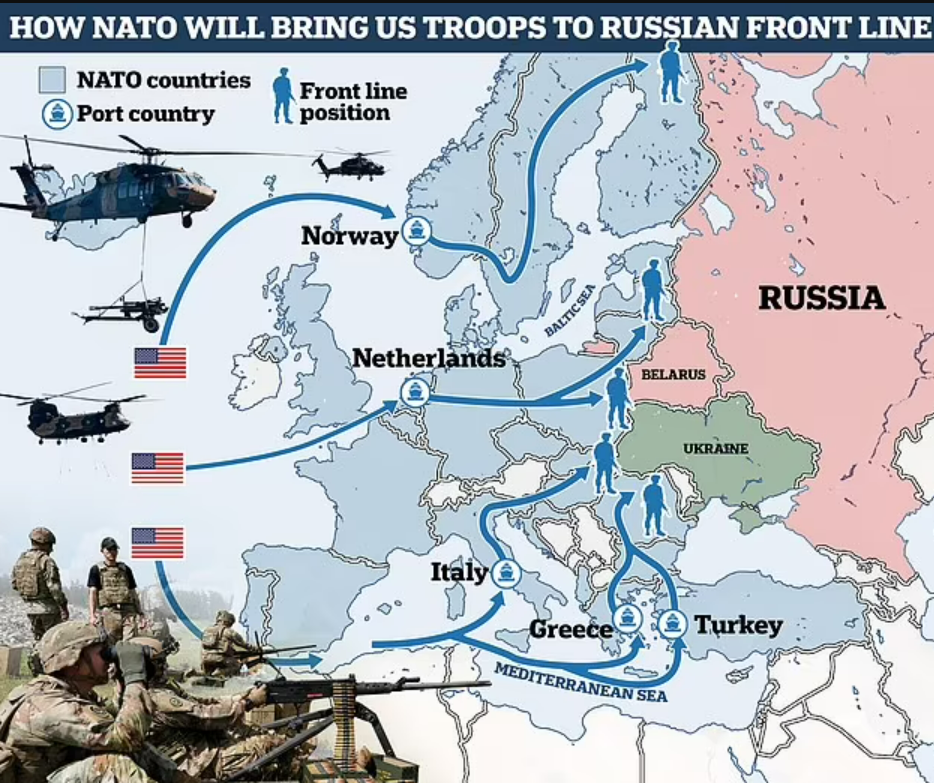
It follows revelations NATO is planning new avenues to rush US troops through Europe to frontlines around Ukraine in case the ongoing conflict spills over into Western Europe.
Germany’s war plan will likewise include means to move NATO troops through the country to the eastern flank, where the armed forces are to be based.
The plan acknowledges private companies may have to make their vehicles and IT infrastructure available to the Bundeswehr if required for the war effort.
Doctors, psychologists, nurses and vets may also be repurposed in military and civil service roles.
Shockingly, ‘compulsory service for conscripts will be reinstated’ in the event of war, allowing citizens to be drafted at any time.
Germany abandoned military service in 2011 but, like Britain, has mulled the possibility of its return in recent years.
After a long period of underinvestment into the military, Germany finally hit its NATO target of spending two per cent of GDP on defence for the first time since the Cold War this year. Read more here…