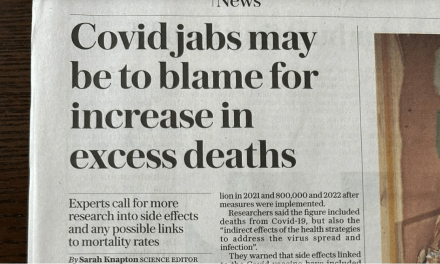
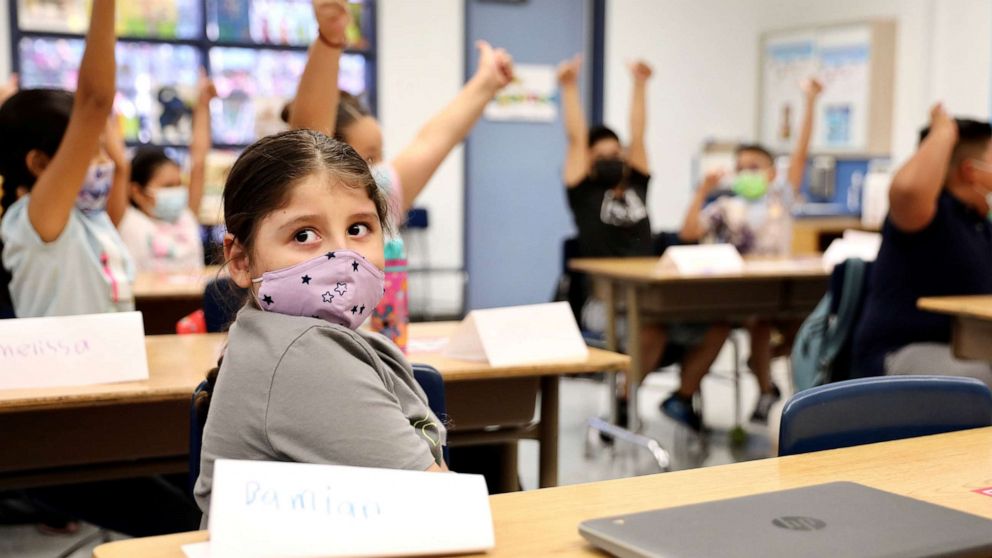
One of the consistent mercies of the SARS-CoV-2 “covid-19 pandemic,” even at its most virulent initial stages, has been the paucity of serious disease in children generally, and healthy children, universally. Covid-19 always was and remains a very highly age– and comorbid risk-stratified disease that targets the extremely frail elderly—especially those in congregate care—and the otherwise middle-aged to elderly with multiple (for example, ≥ 6!), severe, chronic comorbidities.
During 3+ years, including the period when the most virulent early SARS-CoV-2 strains were predominant, through the Omicron wave, and till now, not a single pediatric death due to covid-19, has been recorded in Rhode Island. This contrasts starkly with the three HINI influenza (swine flu) pediatric pneumonia deaths that accrued in a single flu season, during the 2009-2010 swine flu pandemic, mirroring recent national US pediatric influenza death trends. Comparative US pediatric influenza vs. SARS-CoV-2 mortality data since 2009, underscore how both pandemic, and bad seasonal influenza outbreaks—with which we cope, appositely, minus hysteria—pose a greater mortality risk to children, than SARS-CoV-2.
We have also learned that SARS-CoV-2 transmission, like influenza transmission, is driven by persons with symptomatic infections. Both SARS-CoV-2 contact tracing studies, and an elegant experimental design tracking viral emissions from deliberately infected healthy subjects, just published in the Lancet, have reaffirmed this observation. Moreover, regardless of mode of transmission, it is also established that children did not “drive” the SARS-CoV-2 pandemic.
Complementing these irrefragable SARS-CoV-2 mortality and transmission data, a century of uniform public health evidence, bolstered over the past four decades by randomized, controlled trial findings, demonstrates that community masking (with N95 masks, as well) does not prevent respiratory virus infections (influenza, SARS-CoV-2, RSV, and others) in adults, or children.
Blithely ignoring each of these four fundamental, evidence-based considerations, on August 24, 2023, just prior to the reopening of Rhode Island public schools after summer recess, the Rhode Island Department of Health’s (RIDOH) Center for Covid-19 Epidemiology (CCE), distributed a memorandum (original pdf here; archived here) to public “School and District Leaders,” with the following cover email from CCE “team leader,” Julia Brida:
From: Brida, Julia (RIDOH-Contractor) <Julia.Brida.CTR@health.ri.gov>
Sent: Thursday, August 24, 2023 1:51 PM
Cc: COVID19Questions, RIDOH <RIDOH.COVID19Questions@health.ri.gov>
Subject: [EXTERNAL] Center for COVID-19 Epidemiology- Back to School Memo
Importance: High
Good Afternoon,
We hope you have had a great summer! Ahead of the 2023-24 school year, the Rhode Island Department of Health Center for COVID-19 Epidemiology (CCE) wanted to share a memo to provide key updates and information regarding COVID-19. This includes:
-
COVID-19 key recommendations
-
Clinical guidance
-
Tracking COVID-19 in Rhode Island
-
COVID-19 operational updates
-
Testing resources
-
Outbreak reporting and support
Center for COVID-19 Epidemiology, Education Team
Julia Brida
Senior PM | HCH Enterprises
Education Policy & Engagement Team Lead | Center for COVID-19 Epidemiology (CCE)
Division of Emergency Preparedness & Infectious Disease (EPID)
Rhode Island Department of Health (RIDOH)
The memo itself urged students and staff to: “[G]et tested when you have COVID-19 symptoms;” “If exposed to someone with COVID-19, monitor symptoms; test after day 5; and wear a mask through day 10;” and
“If you have COVID-19, isolate at home for 5 days and wear a mask through day 10.” A so-called “Covid-19 Operational Update” section of the memo declared, “Testing remains an important tool to detect infection and prevent COVID-19 spread.”
Glaringly absent from the memo (archived here) was any unambiguous statement that these recommendations were not compulsory for students (and their parents), staff, or administration, and non-compliance with them would not preclude an individual’s school attendance, limit their school activities, or affect school district funding.
This current sorry situation, vis-à-vis “covid public health policy” for schools, continues the unbroken thread of Lysenkoist mismanagement which knits together Rhode Island’s response since children returned, gingerly, in part, to “in-class learning” during September, 2020.
RIDOH and the rest of Rhode Island’s “covid brain trust” have always enacted uncritically the policies hectored at the public by national covid leadership figures, such as former “Covid-19 Response Coordinator,” Dr. Deborah Birx. Dr. Birx was fêted at the University of Rhode Island in the fall of 2020, where she aggressively pushed mass, unselective covid testing because, “her main concern is (was) asymptomatic spread.” This misbegotten testing policy and the false construct of asymptomatic spread, were of course both rubber-stamped by RIDOH and its then generalissima, Dr. Nicole Alexander-Scott. Dr. Scott, as proof of her overzealous endorsement of the factitious mass testing/asymptomatic spread paradigm, had RIDOH issue an “early warning” asymptomatic press release, and a subsequent release crowing about the state’s completion of its “millionth covid-19 test.”
Nearly a year later, despite the well-established futility of community masking, generalissima Scott angrily remonstrated, “Masks work,” in response to a query by independent journalist, Pat Ford. Ford’s preamble to his question raised the issue of potential harms of masking to children, which Scott ignored. Read more here…