


Beeflation is here and there’s no signs of it slowing down. The latest data from the US Department of Agriculture’s biannual cattle inventory report on Wednesday showed that the US cattle herd (as of Jan. 1) fell 2% from a year ago to 87.2 million cattle. That’s the smallest herd count since 1951.
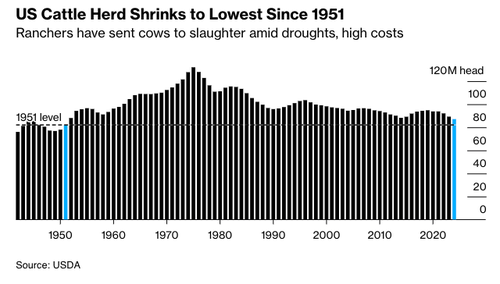
Other key figures from the report showed:
- Of the 87.2 million head inventory, all cows and heifers that have calved totaled 37.6 million.
- There are 28.2 million beef cows in the United States as of Jan. 1, 2024, down 2% from last year.
- The number of milk cows in the United States decreased slightly to 9.36 million.
- U.S. calf crop was estimated at 33.6 million head, down 2% from 2022.
Nevil Speer of Turkey Track Consulting says not only did the latest report shows signs of further contraction, there currently aren’t any signals showing the rebuilding of the U.S. cattle herd has started to take place.
“40% of the on feed population is heifers last quarter. So, there’s no indication that we’re ready to dig back in and start rebuilding,” says Speer.
So, could the U.S. cattle market see higher highs? Dave Delaney of Ever.Ag says it’s a bit of a loaded question, but volatility will continue to take place.
“Short-term, I think as we look at the fat cattle market, we’re on a plane of steady to maybe a softer undertone for a short period of time, but I do believe we are going to go higher in the fat cattle market, as well as the feeder cattle market.”
“We’re nowhere near done with this thing,” says Peel “We had a tremendous runup in prices in 2023. And you can look at the setup last year, and I know some producers are thinking, ‘Okay, we’ve got our run up that we’re close to the top.’ And we’re comparing a lot to 2014 and 2015, which were the last highs, but those high prices in 2014 and 15 happened a year to a year and a half into herd expansion.”
Peel says the highs of the market will be in once the industry starts to retain more heifers and the rebuilding process has taken place.
“That’s what puts the highs in the cattle market. So, we haven’t started that process yet. That’s all ahead of us,” says Peel.
Bloomberg explains the reason why ranchers are increasingly culling more cows:
American ranchers have for the past four years been culling more cows than they were retaining for breeding because of persistent droughts, surging feed costs and elevated interest rates.
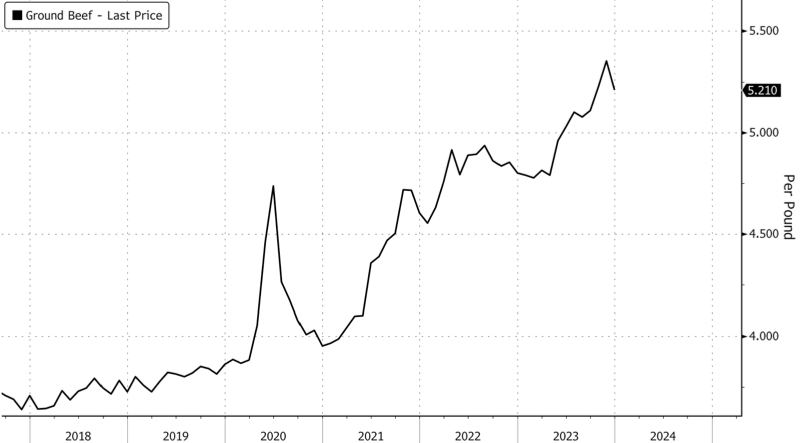
A shrinking herd has pushed US retail beef prices to a record of $5.21 per pound. Rising food prices are the central bank’s worst enemy.
According to Lane Broadbent, president of KIS Futures Inc. in Oklahoma City, drought-plagued pasture conditions might only improve after 2026.
Meanwhile, elites in the WEF cult have been pushing hard to ban cow farts because they allege it’s contributing to climate change. These folks are adamant about resetting the global food supply chain to one that puts working poor folks on a bug-heavy diet.

How about folks rebel against these unelected, woke WEF elites? The most peaceful way to do so is to purchase farmland in fertile Appalachia and raise beef cows or stock up on premium freeze-dried storable food.