
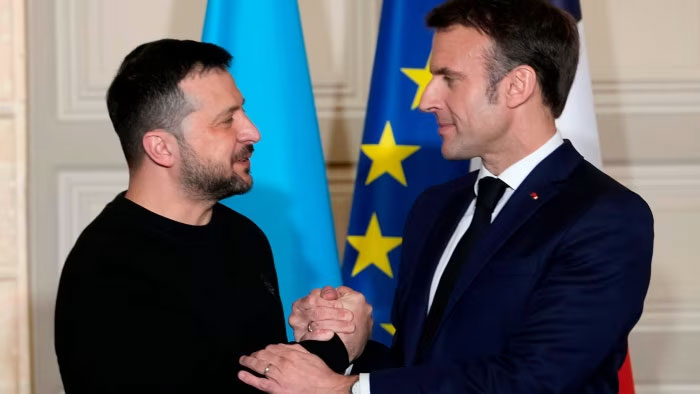

Nuclear France has proposed to protect the infrastructure of Ukraine and the border between Ukraine and Belarus.
Emmanuel Macron pushes far right to show its colors on Russia
Please use the sharing tools found via the share button at the top or side of articles. Copying articles to share with others is a breach of FT.com T&Cs and Copyright Policy. Email licensing@ft.com to buy additional rights. Subscribers may share up to 10 or 20 articles per month using the gift article service. More information can be found at https://www.ft.com/tour.
Emmanuel Macron has called for a parliamentary vote on France’s military support for Ukraine as he attempts to put the spotlight on the far right’s muddled positions on Russia.
Building on a series of hawkish interventions on European security ahead of EU elections, the French president’s move in effect forces both houses of parliament to take a stance on the country’s defence accord with Kyiv.
Macron’s gambit aims to remind voters of Marine Le Pen’s past proximity to Vladimir Putin, president of Russia, in an attempt to blunt her surge in the polls, where her far-right Rassemblement National party is 12 points ahead of his centrist alliance.
“The debate aims to make all political parties accountable and unmask hypocrisies,” said Benjamin Haddad, an MP with Macron’s centrist Renaissance party. “The far right says they support Ukraine but that’s simply not true when you look at their record.”
The RN indicated it would vote against it on Tuesday, as well as the far left France Unbowed (LFI) party. But with Macron’s and other mainstream parties in favour, approval in the National Assembly was likely.
The non-binding votes on Tuesday and Wednesday are also part of Macron’s change of tack on Ukraine, as he has grown increasingly vocal about the need for Europe to do more to stop Moscow from winning the war, especially as Kyiv faces setbacks on the battlefield and US support has dried up. He broke a taboo and was quickly rebuffed by Nato allies for saying last month that sending western troops to Ukraine “should not be ruled out”.
In France, the comments spooked the public, drew condemnation from across the political spectrum and triggered an intense debate about just how far France should go to help Ukraine.
Polls showed 79 per cent of the public would oppose French troops fighting in Ukraine, but a slight majority of 52 per cent support soldiers being sent to carry out support functions, according to an Elabe poll.
Among Macron voters, however, support has been growing for sending more military and economic aid to Ukraine, while Le Pen’s voters have dwindling backing for both measures, the polls shows.