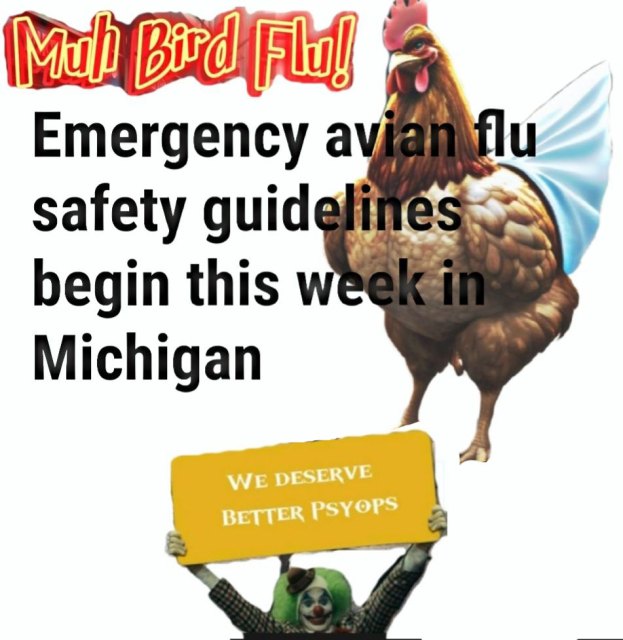
Last week Michigan’s new “emergency” bird flu safety guidelines began that affect all dairy and poultry operations in the state.
The guidelines include the designation of a biosecurity manager, establishing a perimeter that limits access to livestock, and implementing cleaning and disinfection procedures at those access points.
The emergency guidelines also include farms maintaining a record of vehicles and people who cross access points.
The Food and Drug Administation continues to advise against drinking raw milk and recommends that the dairy industry does not manufacture or sell raw milk or raw milk products.
It’s always about control and massive surveillance. Oh, and lying to you about the many benefits that come from organic farming without any gene-editing garbage. Nonetheless, all of it is part of the bird flu plandemic narrative.

Michigan farmers are responding to the new Avian Flu “Extraordinary Emergency” order from MDARD, Michigan’s Department of Agriculture and Rural Development.
New safety guidelines must be in place by this Wednesday that affect all dairy and poultry operations in the state.
The guidelines include the designation of a biosecurity manager, establishing a perimeter that limits access to livestock, and implementing cleaning and disinfection procedures at those access points.
Chief Medical Executive for the state of Michigan, Dr. Natasha Bagdasarian, said the most severe cases of the Bird Flu seem to be in poultry.
“Poultry don’t recover well from this virus,” said Bagdasarian. “This is a highly pathogenic virus in poultry and the dairy cows do tend to recover, even though their milk production is slowed down.”
M-DARD first detected Avian Flu in Michigan dairy cattle on March 29 of this year. The disease has since been detected in more dairy herds and commercial poultry flocks in 7 counties.
The emergency guidelines also include farms maintaining a record of vehicles and people who cross access points.
Regarding the health risks for humans, Bagdasarian said there is some positive news amidst the crisis.
“We had a number of workers who had been exposed, but very few have been symptomatic,” said Bagdasarian. “And no one who has been symptomatic and tested for the virus, had tested positive. So, that’s really good news. ”
The Food and Drug Administation continues to advise against drinking raw milk and recommends that the dairy industry does not manufacture or sell raw milk or raw milk products.