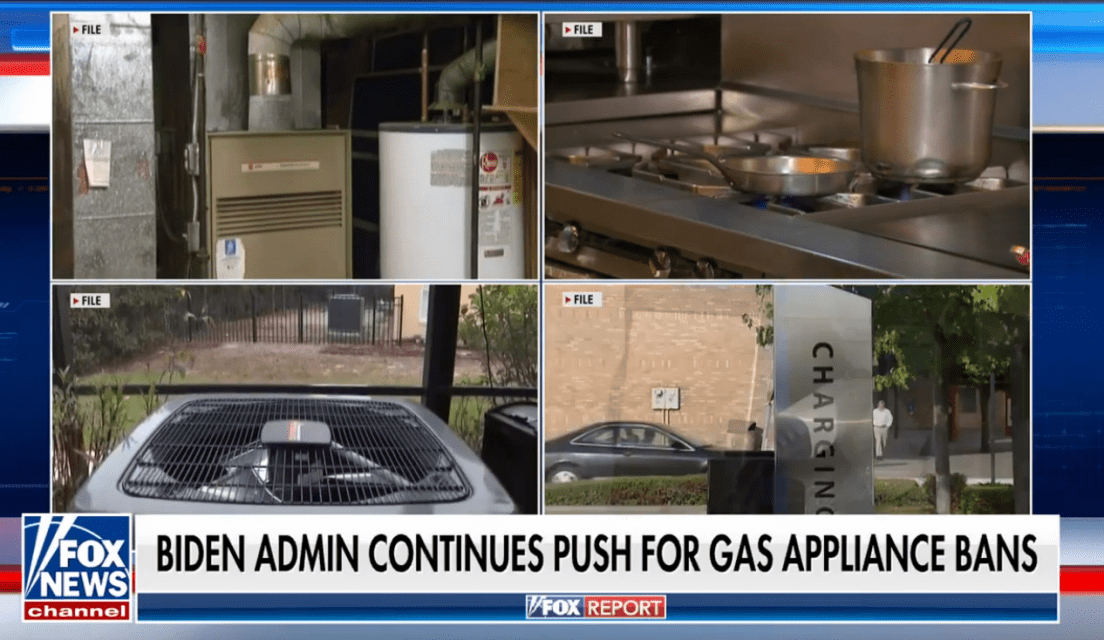

Energy experts and industry groups are warning that the Biden administration’s latest home appliance crackdown on water heaters will, like other energy efficiency regulations, harm American consumers.
The Department of Energy (DOE) proposed energy efficiency regulations on water heaters late Friday, saying the new standards would go into effect in 2029 and save Americans billions of dollars while reducing carbon emissions. However, experts interviewed by Fox News Digital said the standards would ban cheaper alternatives, create minimal utility bill savings and reduce consumer choice.
“Their plan is to electrify everything they possibly can because they are under this distorted fantasy that renewables will be plentiful and cheap and reliable. They are none of the above,” said Mark Krebs, a mechanical engineer, energy policy consultant and former DOE adviser. “The physics defy what they want to do, the raw materials defy what they want to do, a free market economy defies what they want to do.”
“This is the administrative state — this is how they work,” Krebs continued. “It’s in their best interest to keep increasing their regulatory reach. That’s how they work.”
Overall, the DOE projected the regulations would save Americans about $198 billion while curbing emissions by 501 million metric tons over the next three decades. That is roughly the same carbon footprint as 63 million homes or half of all homes nationwide.
Under the rule, the federal government would require higher efficiency for heaters using heat pump technology or, in the case of gas-fired water heaters, to achieve efficiency gains through condensing technology. Non-condensing gas-fired water heaters, though, are far cheaper and smaller, meaning they come with lower installation costs.
“One of the things about these appliance standards — they’re all problematic — is they take away consumer choice,” Ben Lieberman, a senior fellow at the Competitive Enterprise Institute, previously told Fox News Digital in an interview. “But especially water heaters, stoves, furnaces. These are appliances that come in natural gas or electric version. There’s a real effort underway by regulators to take away the natural gas option by making it less desirable.”
“I think what we’re seeing with gas stoves and furnaces is what we’re also seeing here with water heaters,” Lieberman said. “The gas versions of water heaters will survive, but they’ll be more expensive and they’ll be a less desirable option than electric. So, this is using efficiency regulations to impose the electrification agenda.”
He also noted that while condensing gas-fired water heaters and heat pumps are more efficient, they are more expensive and could be very costly to repair. READ MORE.